July 24, 2026
Best Reference Photos for a Needle Felted Pet Portrait
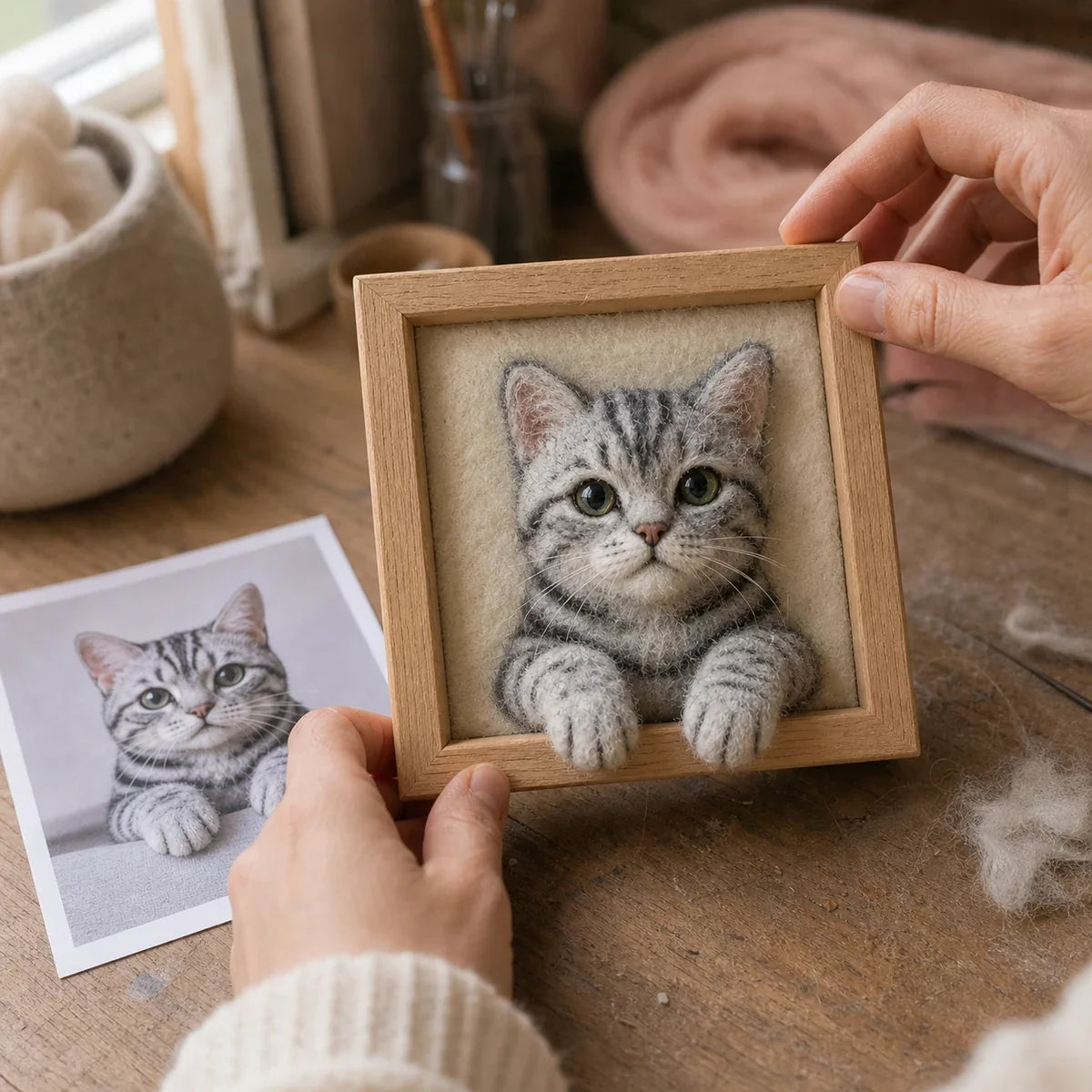
A custom needle felted pet portrait begins with photographs. The wool can capture a familiar expression, coat pattern, ear shape, or tiny patch of colour only when those details are visible in the reference images. You do not need a professional photo shoot, but a thoughtful set of clear pictures gives the portrait maker better visual information to work from.
This guide explains which pet photos are most useful, what to avoid, and how to prepare a simple reference set for a framed wool portrait, mini felt sculpture, or hanging felt charm.
Start with one clear hero photo
Choose one image that feels most like your pet. This is the hero photo: the photograph that best communicates the expression, head position, and overall mood you want the portrait to carry.
The strongest hero photo is usually:
- in sharp focus, especially around the eyes and nose;
- taken near your pet’s eye level rather than from far above;
- lit by daylight or soft, even indoor light;
- large enough to enlarge without becoming blocky;
- free from filters that change coat or eye colour.
A beautiful photograph is not always the most useful reference. A candid phone photo with accurate colour and visible facial details can be more helpful than a heavily edited portrait.
Add front, three-quarter, and side views
One photograph rarely shows every important feature. Add two or three supporting images from different angles so the shape of the face, muzzle, ears, and coat can be understood.
Front view
A direct or nearly direct front view helps show eye spacing, facial symmetry, blaze markings, muzzle shape, and the relationship between the ears and face.
Three-quarter view
A three-quarter angle often shows personality best. It reveals depth around the muzzle and cheeks while keeping both eyes visible. This can be especially useful when the finished portrait should feel lively rather than formal.
Side view
A side view clarifies the profile of the forehead, nose, mouth, ears, and neck. For cats and dogs with distinctive silhouettes, this angle can explain details that a front photo hides.
If you are ordering a mini sculpture, include at least one full-body photograph as well. The body proportions, leg length, tail shape, and posture may matter even when the face remains the main focus.
Photograph coat colour in natural light
Indoor bulbs can make white fur look yellow, black fur look brown, or grey fur look blue. Whenever possible, take reference photos beside a bright window or outdoors in open shade. Avoid harsh midday sun, which can create deep shadows and erase detail in dark coats.
For pets with several colours, include an image that clearly shows where each colour begins and ends. Photograph distinctive patches, spots, socks, chest markings, forehead stripes, or tail rings from close enough that their shape is easy to see.
Dark-coated pets benefit from slightly brighter exposure. Light-coated pets need soft light that preserves texture instead of turning the coat into a flat white area.
For a cat-specific way to map stripes, patches and small asymmetries, use the needle felted cat coat-marking guide.
Make the eyes, nose, and ears easy to study
Small facial details often carry the strongest sense of recognition. Look for images that show:
- the natural eye colour without flash glare;
- the direction and shape of the gaze;
- nose colour and any freckles or pale areas;
- ear shape, ear position, and distinctive tufts;
- whisker pads, eyebrows, and markings around the mouth.
If the left and right sides of your pet’s face are different, provide a clear photograph of each side. Mention which small feature matters most to you so it is not overlooked among the other references.
Avoid filters, screenshots, and strong compression
Social media filters can alter colour, sharpen edges unnaturally, or enlarge the eyes. Screenshots may also reduce resolution and introduce interface elements over the image. Send the original photo file when you have it.
Try not to rely on photographs with heavy motion blur, a bright flash reflected in the eyes, a face hidden by toys or hands, or deep shadows covering one side. These images can still be included for personality or pose, but support them with clearer detail shots.
Preparing photos for a memorial pet portrait
Sometimes the available photographs are older, printed, or limited. Choose the clearest image as the main reference and gather any additional photos that reveal details missing from it. A side view may explain ear shape; a sunny outdoor image may show true coat colour; another image may capture the expression you remember.
If you only have printed photographs, scan them at a high resolution or photograph them straight on in even light. Avoid glare and keep the camera parallel to the print. Do not discard an emotionally important image simply because it is imperfect—use it to communicate the desired feeling, then add clearer references for physical details where possible.
Organise your reference set
A small, labelled group of strong images is easier to follow than a large folder of near-duplicates. A useful set often includes:
- one hero photo for expression and pose;
- one clear front or three-quarter view;
- one side view;
- one photo showing accurate coat colour;
- one close-up of any distinctive marking;
- one full-body view if the format includes the body.
You can rename files with simple labels such as hero, left side, coat colour, or chest marking. Add a short note if a photograph shows the right colour but the wrong expression, or the right pose but inaccurate lighting.
Quick photo checklist
- Is at least one photo sharp around the eyes and nose?
- Can both sides of the face and the ear shape be understood?
- Is the coat colour accurate in at least one image?
- Are important spots, stripes, socks, or patches visible?
- Have filters and screenshots been avoided where possible?
- Is there a full-body view for a mini sculpture?
- Have you identified the expression or feature that matters most?
Choose a portrait format
Once the reference set is ready, compare the current custom needle felted pet portrait formats. Use the format comparison guide for a frame, charm or mini sculpture, then check the ordering guide. For timing and presentation, see the gift guide. If you are unsure whether the photographs show enough detail, contact WYjade or review the FAQ.