July 28, 2026
Can Cats Wear Necklaces? A Comfort-First Cat Jewelry Guide
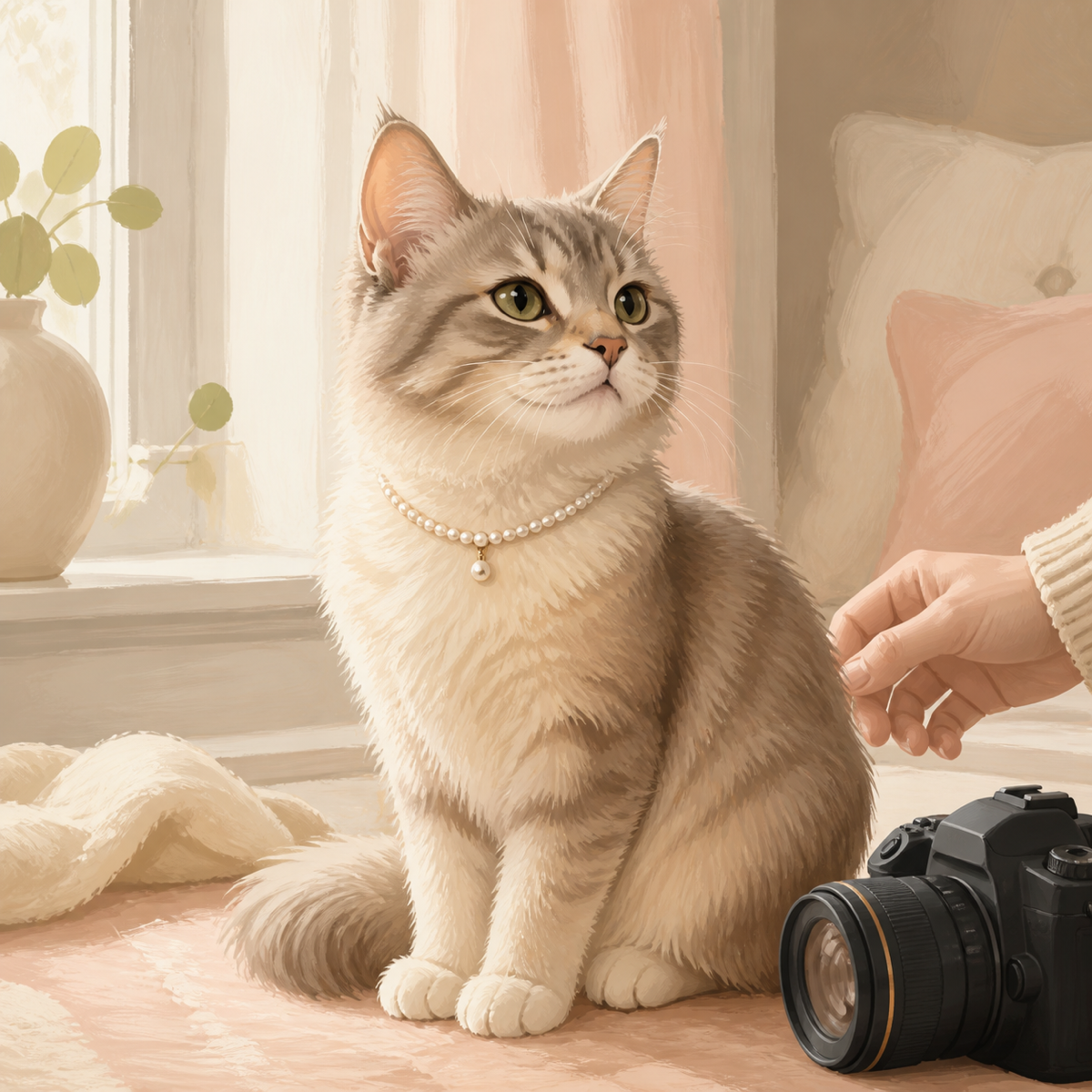
A small necklace can add a polished detail to a birthday portrait, adoption anniversary, holiday card, or quiet at-home photo. The best result, however, is not the most elaborate look. It is an accessory that suits the cat, fits the planned moment, and can be worn calmly for a brief, closely supervised session.
This guide covers fit, supervision and photo preparation for cat jewelry and decorative pet necklaces. It also explains how to take a clear reference photograph for a custom felt portrait.
1. Treat cat jewelry as a decorative photo accessory
Decorative pet jewelry is not a functional collar, harness, restraint, or leash attachment. It should never be used to control movement, attach identification, or secure a cat outdoors. It is best reserved for a short indoor portrait or a calm special occasion while an adult stays close and watches continuously.
Remove the accessory before sleep, feeding, active play, grooming, travel, crate time, or any period without direct supervision. If your cat tries to chew it, paws at it repeatedly, freezes, hides, vocalises, or otherwise appears uncomfortable, remove it immediately. A good photograph is never worth forcing the moment.
2. Check the listed measurements before ordering
Product names such as “small,” “cat size,” or “pet necklace” are not enough on their own. Compare the measurements shown on the product page with the area where the necklace will rest. Use a soft measuring tape and keep it level without tightening it against the coat.
Allow for coat thickness, especially with long-haired cats. The piece should not compress the neck, and it should not hang so loosely that it can swing into the mouth or catch easily. If your measurement falls between available sizes, ask for guidance before ordering rather than guessing. You can contact WYjade with the product name and your cat’s measurement.
3. Choose light visual details for a short session
For portraits, visual balance matters more than size. A small pendant, a narrow strand, or a simple cluster of pearls can be easier to frame than a large statement piece. Look for smooth edges, secure connections, and a design that does not compete with the cat’s face.
Before the planned photo, let the cat inspect the accessory while it is off the body. Avoid introducing it for the first time during a busy party or around unfamiliar people. A familiar room, normal lighting, and a favorite resting spot usually create a calmer setting than a staged environment full of new props.
4. Match the colour to the coat and background
Colour contrast helps the accessory remain visible without overwhelming the portrait. Soft pink, ivory, and pale gold can stand out gently against dark coats. Deep red, emerald, or navy may create definition against white, cream, silver, or pale orange coats. For patterned coats, a simpler single-color accessory often keeps attention on the eyes.
Also consider the background. A necklace that blends into the coat may still photograph beautifully against a contrasting blanket or wall. Natural window light can reveal texture and colour more evenly than direct flash, which may create bright reflections on metal or pearls.
5. Keep the photo session brief and voluntary
Prepare the camera, background, and treats before putting the accessory on. That way, the session does not become a long wait. Start with a few frames rather than trying to capture a perfect pose immediately. Let the cat sit, stand, or lie down naturally instead of holding the head in position.
Watch body language throughout the session. Relaxed posture and normal movement are more important than a particular angle. Pause or end the session at the first sign of stress. Remove the jewelry as soon as the photographs are finished and store it where the cat cannot reach it.
6. Create a coordinated keepsake
A clear portrait made during the session can also become reference material for a handmade keepsake. If you are considering a custom needle felted pet portrait, photograph the face in even light and include a few angles that show the ears, markings, eye colour and chest pattern.
You do not need to keep the jewelry on for every reference photo. One image can show the special accessory, while separate close-ups can document the natural coat accurately. For more guidance, read how to choose the best photos for a custom needle felted pet portrait.
Quick checklist before a cat jewelry photo
- Confirm the product measurements and compare them with your cat.
- Inspect the accessory for loose or damaged parts before use.
- Prepare the camera and background before putting it on.
- Use it indoors for a short, directly supervised session only.
- Never attach a leash, tag, or restraint to decorative jewelry.
- Remove it immediately if the cat appears uncomfortable or tries to chew it.
- Store it securely after the session.
Frequently asked questions
Can cats wear necklaces?
WYjade cannot determine whether decorative jewelry is suitable for every cat. If you use a necklace, keep the session indoors, brief and continuously supervised, and remove it at the first sign of discomfort.
Are gemstone or pearl necklaces safe for cats?
No decorative necklace should be treated as risk-free. Inspect beads, stones and closures before use, remove the piece if your cat paws at or chews it, and contact a veterinarian promptly if a part is swallowed or your cat becomes unwell.
What accessories can cats wear day to day?
For everyday wear, use a properly fitted cat collar designed for that purpose and follow its instructions. Decorative necklaces, bows and scarves belong to brief, supervised sessions only.
Can a cat wear decorative jewelry all day?
No. WYjade pet jewelry is intended as a decorative accessory for brief, closely supervised moments. It is not designed for unsupervised wear, sleep, rough play, or everyday restraint.
Can I attach a leash to a pet necklace?
No. Never use decorative jewelry as a collar, harness, or leash attachment. Use properly fitted equipment designed for control and identification instead.
What if my cat does not like wearing accessories?
Skip the accessory. You can place it beside the cat for a still-life detail, photograph it separately, or choose a portrait without jewelry. The session should remain comfortable and voluntary.
What photos work best for a felt portrait?
Sharp, well-lit images at eye level are most useful. Include front, side, and three-quarter views, plus close-ups of any distinctive markings. More detail is available in our linked pet portrait photo guide.
Measure first, prepare the camera before the necklace goes on, and stop as soon as the cat appears uncomfortable. A short session is enough.