August 22, 2026
Dog Birthday Photoshoot Ideas at Home: A Calm Setup
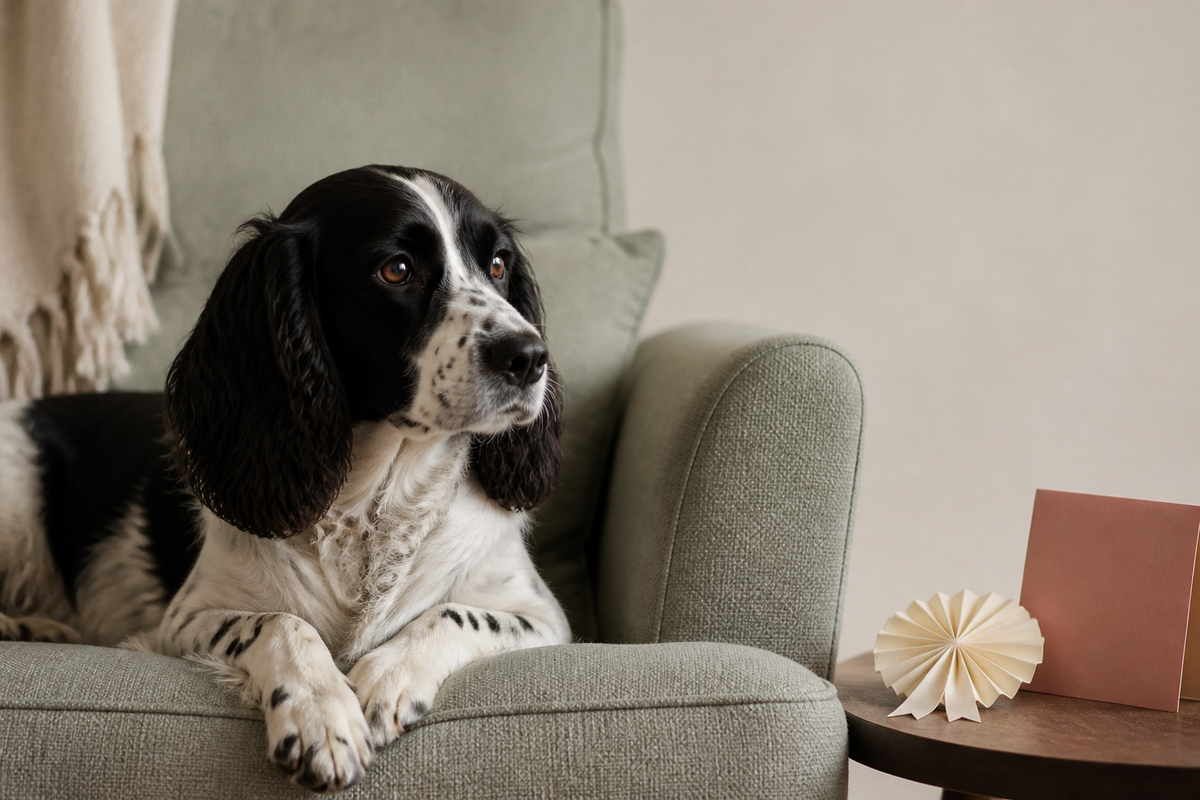
Dog birthday photoshoot ideas at home do not need a studio set or a dog who can hold a perfect pose. One familiar room, soft light and a few prepared frames are usually more useful than a pile of decorations. The dog should be able to walk away at any point.
Set up the photograph before you add any styling. Clear the floor, place the camera, take a test shot and decide which objects will stay in frame. When the dog arrives, you can concentrate on expression and body language rather than moving furniture around them.

Build a set your dog can leave
Choose a room your dog already uses and keep an open route back to their bed, doorway or usual resting place. Clear cables, glass, pins, loose ribbon and small decorations from the floor. If an object could be chewed, swallowed, knocked over or caught around a leg, it does not belong within reach.
A plain sheet of paper or fabric against a wall is enough for a backdrop. Add one wrapped box, a paper card or a favourite toy at the edge of the frame. The scene will still read as a birthday photograph without surrounding the dog. It also gives you room to crop the image later.
Put your phone or camera at roughly eye level, clean the lens and take a test picture of a cushion where the dog will sit. Check the background for plug sockets, bags and bright patches that draw attention away from the face.
Photograph the dog before the decorations
Begin with the dog in the chosen light and no wearable accessory. You may already get the best expression of the session. If the birthday detail never makes it into a frame, you will still have a good portrait rather than an unfinished setup.
Soft window light is easier to work with than direct flash. The American Kennel Club's dog photography guide recommends getting down to the dog's level, focusing on an eye and using shade or soft natural light. At home, turn the dog slightly towards a window so that the face is lit from the front or side. If the face becomes a silhouette, move yourself or the backdrop rather than asking the dog to stay still while you troubleshoot.
Use a shutter or burst setting you already understand. A birthday is not the moment to learn every manual camera control. Tap the nearest eye to focus, take several short bursts, then lower the phone and give the dog space.
Three quiet compositions beat one crowded scene
For the first frame, step back and include the backdrop, one gift and the dog's whole body. The second can be an eye-level portrait with only a small birthday cue in view. For the third, move closer for the eyes, muzzle and one recognisable detail such as a favourite toy.
A paper age card works better than a tall prop that needs to balance near the dog. Wrapped empty boxes can add shape and colour without introducing food. Avoid lit candles, trailing balloon strings and anything that makes a sudden noise. A prop is useful only if it can sit safely without someone holding the dog beside it.
Let the dog choose whether to sit, stand or lie down. A sideways glance, a stretch or an ear turned towards a familiar sound can feel more like your dog than a rigid front-facing pose.
Let decorative jewellery stay a small detail
If you want one styled frame, add decorative pet jewellery only after the unstyled photographs are finished. It is a brief indoor photo accessory, not a functional collar, restraint or leash attachment. Read the current listing and use the pet necklace size guide before choosing a piece. Do not guess from breed, weight or a label such as “small”.
Keep an adult close and watching throughout. Remove the jewellery before food, play, sleep, travel or any unsupervised moment. If the dog mouths it, paws repeatedly at it, freezes, backs away or tries to leave, take it off. You can photograph the accessory beside the dog or leave it out altogether.
The live WYjade pet jewellery collection shows the options that are currently public. A generated editorial image can suggest colour or composition, but it cannot prove the fit, scale, construction or fastening of a real item. Those details come from the product page and your own measurement.
Read the dog's answer, not the shot list
The RSPCA's dog body-language guide describes a relaxed dog with a loose posture, natural ear position and soft or normally shaped eyes. A lowered head, tucked tail, ears held back, yawning, lip licking or avoiding eye contact can indicate worry. A stiff body or fixed stare is also a reason to give the dog space.
Body language is more useful than a timer. Some dogs may lose interest after a few frames; others may settle beside the backdrop. End the session when the dog disengages. Do not put an accessory back on for “one last shot” after they have already objected.
A ten-frame story is enough
Think in pairs rather than chasing one flawless photograph. Take a wide view of the room, then a closer version. Photograph the dog looking towards the camera, then looking away. Make one image with the birthday detail and one without it. Add a close-up of paws, eyes or a familiar toy.
Finish with an ordinary portrait in the same light after the props have gone. That last frame often has the calmest expression because the dog knows the strange arrangement is over. It also gives you an image that will not feel tied to one year's decoration.
Keep the photographs that feel like your dog
When you review the set, check focus around the eyes and remove frames with a worried expression, even if the styling looks neat. Crop out background clutter later instead of using digital zoom while shooting. Keep the sharp candid photographs as well as the posed ones.
If you are also choosing a gift, the pet gift guide can help you compare options. Use the sizing guide for measurements, then check the selected product page for current specifications and availability.