August 20, 2026
Pet Necklace Size Guide: How to Measure Before You Buy
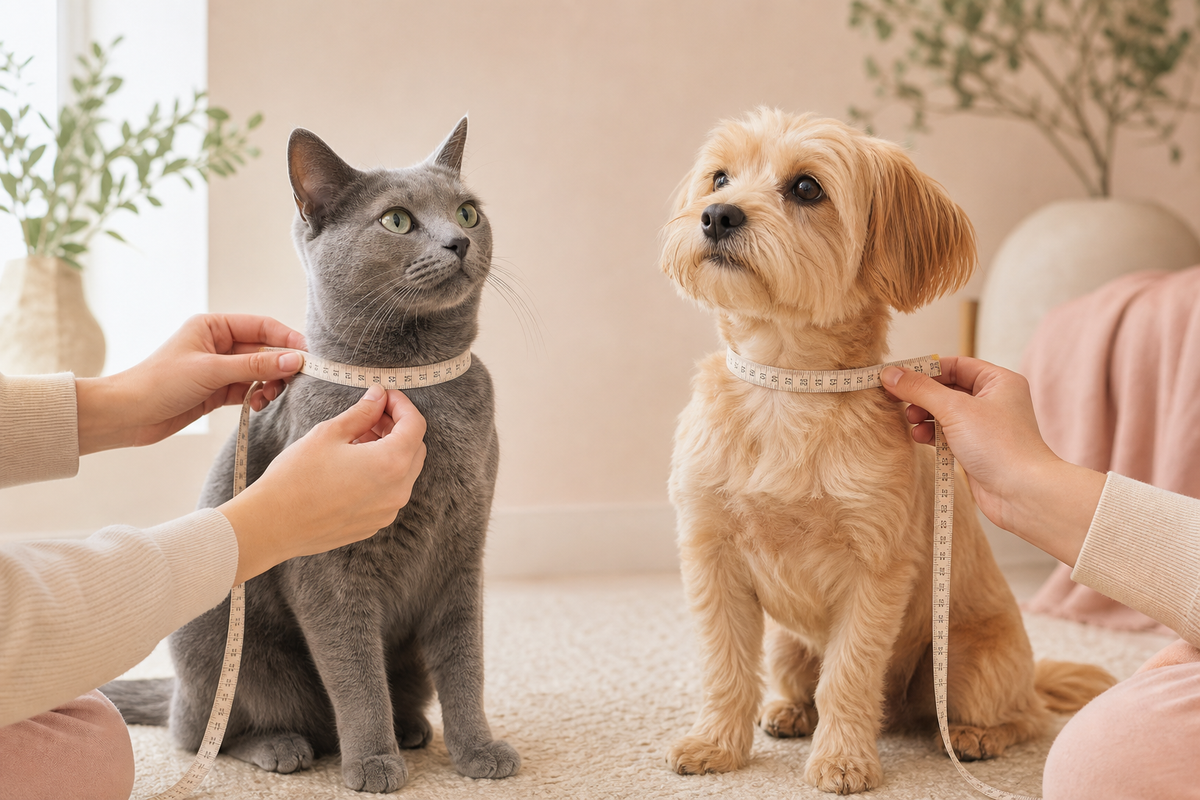
A pet necklace size guide should remove guesswork, not replace the measurements on a product page. Cats and dogs with a similar weight can have very different necks, while thick fur can make a pet look larger than the place where an accessory will actually sit. The useful number is the one you take from your own pet, on a calm day, before you choose a decorative piece.
This guide is for decorative pet jewellery used during a short, closely supervised styling or photo session. It does not apply to a collar, harness, restraint or leash attachment. If your pet dislikes having their neck handled, stop. A photograph is never worth forcing the process.

Begin with the listing you are considering
Before you reach for a tape, open the current product page. Look for the size range, whether the length is fixed or adjustable, and where the seller expects the piece to sit. A rigid strand, an extension chain and an elastic design do not use measurements in quite the same way. That is why a universal rule such as “add two inches” can be misleading.
If the listing does not give enough information to compare with your pet's neck, pause there. Do not turn a vague size label such as “small” into a promise of fit. Ask for the missing dimensions or choose an item with a clear range.
Take one calm neck measurement
Use a soft dressmaker's tape. If you do not have one, use a flat, non-stretch piece of string, mark the meeting point, then lay it against a ruler. Avoid elastic cord because it can change length while you are measuring.
Let your pet stand or sit in a normal position. Place the tape around the natural base of the neck, where the decorative piece is expected to rest. Keep the tape level rather than letting it slope down the chest. It should touch the coat without pulling fur tight or pressing into the neck.
Read the number in centimetres, then repeat the measurement after a short break. Two similar readings are more useful than one hurried attempt. If the numbers differ noticeably, try again later when your pet is settled.
Write down the bare measurement, not a guessed size
Record the actual circumference first. Do not immediately convert it to XS, S or M. Those labels are not standard across brands, and the same letter can cover different ranges.
For a long-haired cat or dog, part the coat gently enough to find where the piece would sit, but do not compress the fur against the skin. You are trying to capture a repeatable measurement, not make the smallest possible number. Note that the pet has a dense coat, especially if the listing shows the accessory resting above the fur.
Weight and breed can help you describe your pet, but neither replaces the tape. Two small dogs can carry their weight in different places. An adult cat's neck can also change with growth, coat condition or body condition. Use the current measurement rather than an old order or a breed chart.
Compare the number with the product's own range
Now return to the listing. Check whether its published measurement describes the full necklace length, the wearable neck range, or a fixed inner circumference. These are not interchangeable. If the wording is unclear, treat the size as unconfirmed.
For an adjustable design, your pet's measurement should fall within the stated wearable range without relying on the very last link or extreme end of the adjustment. For a fixed design, follow the maker's instructions for any intended allowance. Do not invent extra room if the product page has not explained how its measurement works.
If your pet sits between two published sizes, the safest answer is not automatically the larger or smaller one. Construction matters. Ask the seller which measurement they need and provide the bare neck circumference you recorded. If there is no reliable answer, skip that piece.
Keep sizing separate from comfort
A number can match a chart and still fail a real-life try-on. Watch your pet's response before you think about photographs. Pawing at the neck, freezing, repeated head shaking, backing away or trying to hide are reasons to remove the accessory. Do not wait for a better pose.
Decorative jewellery should never carry an ID tag needed for daily use, replace a functional collar or connect to a lead. It should also come off before unsupervised time, sleep, rough play, feeding or active movement. For a fuller discussion of when cat jewellery may be appropriate for photos, read WYjade's comfort-first cat jewellery guide.
Use a short try-on before the planned photo
Do the first try-on indoors, away from noise and other animals. Have the camera, treats and background ready before the accessory goes on so the session does not drag on. Keep your hands nearby, and remove the piece as soon as the pet shows that they have had enough.
Look at the way the necklace rests from the front and side. It should not twist into the mouth, catch a leg or disappear so tightly into the coat that you cannot see how it sits. Do not alter the piece, add an improvised fastener or combine it with another neck accessory to force a look.
Re-measure when the pet or product changes
Measure again for a growing kitten or puppy, after a noticeable body-condition change, or when moving to a product with different construction. A measurement from one necklace does not automatically transfer to another. Seasonal coat changes can also affect how a decorative piece appears, even when the underlying neck circumference is similar.
Keep a simple note with the date, centimetre reading and where you placed the tape. That makes the result easier to repeat without pretending it will stay accurate forever.
What to do after you have the number
With a current measurement in hand, you can compare it with the dimensions shown in WYjade's pet jewellery collection. Availability and sizing can change, so read the live product page rather than relying on an older screenshot or article.
If you are choosing a present, settle the measurement before you choose a colour or statement style. WYjade's pet necklace gift guide can help with the visual side once fit is no longer a guess.
The useful sequence is simple: read the listing, measure your own pet, compare like with like, and stop if either the dimensions or your pet's response leave room for doubt. A decorative accessory is optional. Your pet's comfort is not.