August 20, 2026
Needle Felted Pet Portrait Care: Dust, Light and Storage
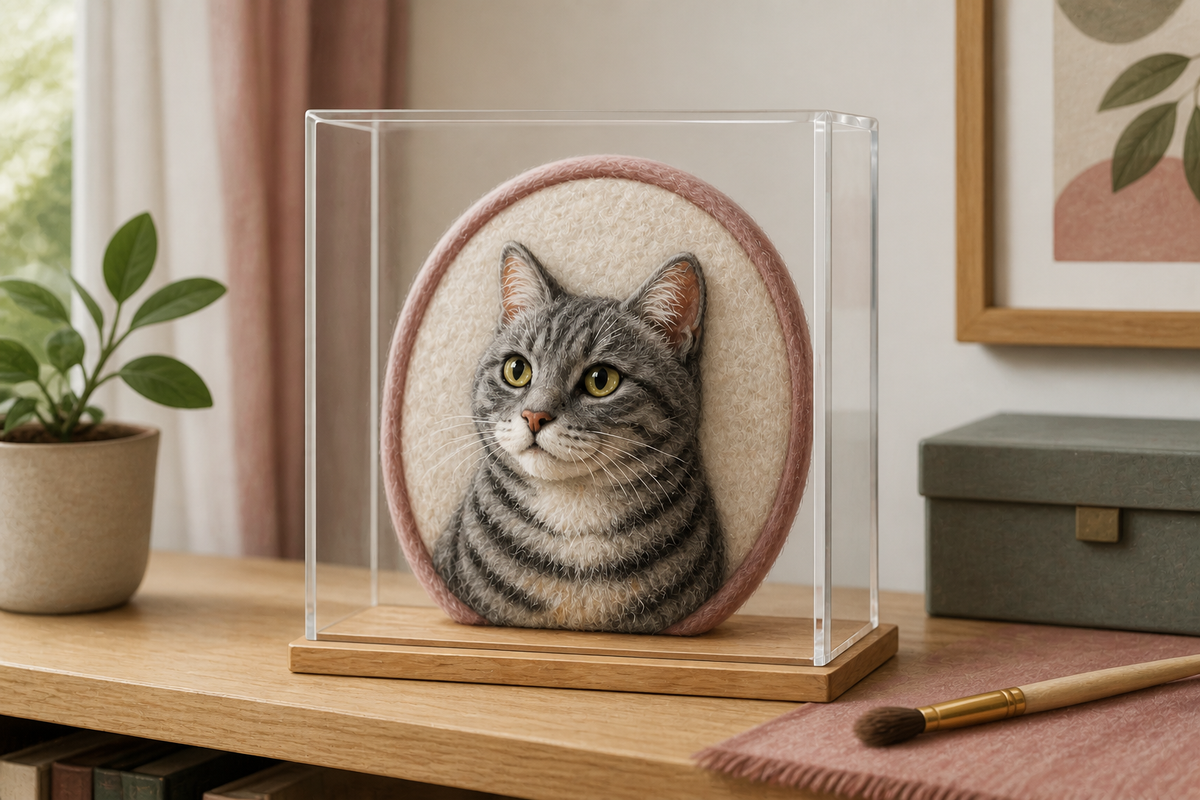
Needle felted pet portrait care is mostly about preventing a mess, not finding a clever way to clean one. Felted surfaces can include compact areas, loose-looking fibres and tiny projecting details. A method that seems harmless on ordinary fabric may disturb the very features that make the portrait recognisable.
This guide covers framed relief portraits, hanging pieces and freestanding felt sculptures. Their construction varies, so keep any care note that came with the artwork and let the maker's instructions override general advice. If you do not know how a particular surface was made, restraint is safer than experimentation.

The best cleaning starts with where you put it
Choose an indoor place away from direct sun, radiators, cooking steam and damp rooms. Light can fade textile colours over time, and a humid bathroom or kitchen brings risks that a dry living-room shelf does not. The portrait should sit on a stable surface, not a narrow ledge where a curtain, door or passing sleeve can catch it.
Think about traffic at a smaller scale too. Keep the piece beyond the reach of pets and young children. A curious paw or a quick grab can pull fibres and topple a sculpture long before dust becomes a problem.
A clear display case can be useful for an uncovered portrait because it limits dust and casual contact. Leave space around the artwork; the cover should never press on whiskers, ears, fur texture or other projecting details. For framed work, check that the frame and its stand or hanging hardware remain secure.
Look first, then decide whether dust needs action
Inspect the portrait in good indirect light without touching it. Loose dust on the case is straightforward: clean the case separately, following the case maker's instructions, and keep cleaning liquid away from the artwork. Dust on the felt itself needs more judgement.
Felt makers do not all give the same surface-cleaning advice. A firm, short-fibre area and a long, deliberately fluffy coat are not interchangeable. Some makers permit a very soft brush on certain work; others warn that brushing or vacuuming can move fibres or small features. That disagreement is a reason to find the instructions for your piece, not an invitation to try every method.
If no instructions are available and the dust is slight, leave the surface alone and improve the display protection. When the dust is obvious, send the maker a close photograph before you touch it. Mention whether the work is flat, relief or freestanding, and whether any area feels loose.
If something spills, do less and document more
Move the portrait away from the source only if you can do so without squeezing or dragging it. Support the frame or base. Do not rub a wet area, add more water, or reach for soap and stain remover. The aim is to prevent a hurried response from spreading the mark or changing the shape.
Photograph the affected area from a few angles and note what happened. Contact the maker with that record. Construction determines whether any local treatment is sensible, and the person who made the portrait is better placed to judge it than a generic cleaning tip.
For an older piece, serious contamination, mould, widespread water exposure or damage that has altered the structure, stop handling it and seek a textile conservator. A home repair is not the right test case for an artwork you cannot replace.
Moving day is a handling problem, not a cleaning job
Use clean, dry hands on the frame or base, and remove rings or clothing that might snag the surface. Lift a freestanding portrait from below. Ears, tails, paws, tufts and accessories may look like convenient handles, but they are details, not lifting points.
For temporary storage, choose a rigid box with enough room to prevent pressure on the portrait. Keep the box in a dry part of the home rather than an attic, garage or shed. Loose, clean packing can stop the frame or base from sliding, but nothing should bear down on the felt.
If the maker confirms that the work contains wool or another animal fibre, check the storage area for signs of textile pests before packing it away and inspect it occasionally. Do not spray pesticide, perfume or essential oil on the artwork. If you find fresh damage or insect activity, isolate the box from other textiles and ask a conservator or the maker what to do next.
Care changes with the portrait format
| Format | Main handling concern | Useful first step |
|---|---|---|
| Framed, mostly flat | Dust around openings and pressure from glazing | Check that nothing touches the felt surface |
| Dimensional relief | Projecting fibres, muzzle or paws | Allow clearance inside any cover |
| Freestanding sculpture | Knocks, tipping and lifting by a detail | Support from the base and use a stable shelf |
If you are choosing rather than caring for a finished piece, compare WYjade's current custom felt pet portrait formats. The live felt pet portrait collection shows the available types, while the ordering guide explains the process. Read the product page before ordering, because format and availability can change.
Ask before you repair
A felting needle, glue, thread or scissors can turn a small change into a permanent one. Do not push fibres back, trim a loose end or reattach a feature unless the maker has given instructions for that exact portrait. What looks like a stray fibre may be part of a colour blend or an anchored detail.
If you need help, take a photograph at normal viewing distance and a close-up of the area. Describe when you first noticed the change and whether the portrait was moved, dropped or exposed to moisture. That gives the maker a useful starting point without forcing you to diagnose the construction.
Good care is deliberately uneventful: a stable shaded display, little handling, protection from dust and an early question when something changes. If you are still preparing an order, WYjade's reference-photo guide explains how to organise the images a maker needs. Once the portrait arrives, keep its care instructions with the order record. Those specific notes are more useful than any one-size-fits-all cleaning trick.