August 23, 2026
Pet Memorial Portrait Ideas: Start With the Memory
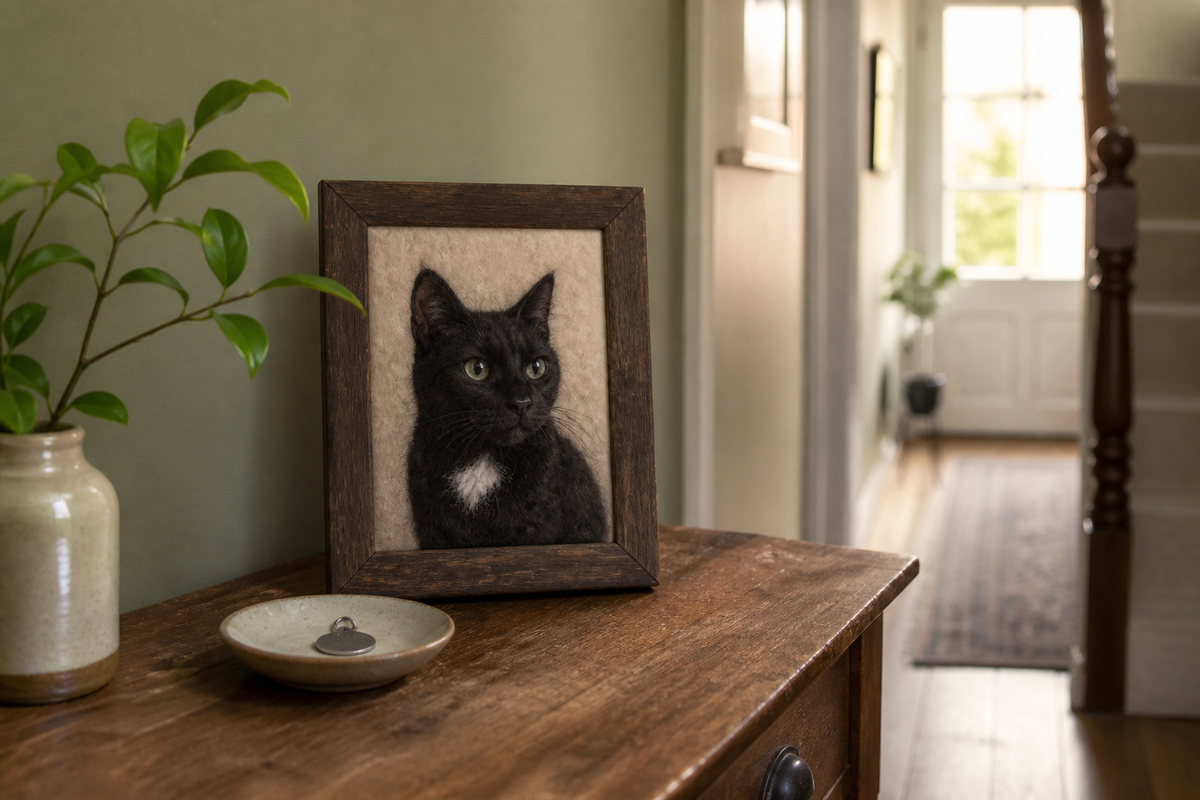
When comparing pet memorial portrait ideas, decide what you want to recognise in the finished piece before choosing watercolour, pencil, felt, sculpture or a framed print.
It might be an alert expression, the uneven colour around one eye, a favourite sleeping position or the spot by the window where your cat spent every afternoon. Once that memory is clear, format and colour become easier choices rather than a search for the most impressive effect.
Begin with one memory, not a mood board
Write one plain sentence before collecting images: “I want to remember the way she looked up from the bottom stair,” or “His grey muzzle and soft, sideways glance matter most.” This gives the portrait maker a specific memory to work from.
The sentence also sets a boundary. A portrait cannot carry every story, photograph and feeling at once. Choosing one recognisable moment gives the maker something concrete to observe and gives you a way to judge the result.
The RSPCA's pet bereavement guidance notes that grief does not follow a tidy line and includes creating memory boxes or keeping personal memories among the ways people may choose to remember a pet. A portrait is one option, not a task that has to be completed on a schedule.
Three portrait directions feel very different
The everyday expression
This version is usually the simplest. Choose a photograph in which the eyes, face shape and ear position look familiar, then keep the background quiet. The aim is not a formal “best” pose. It is the look that family members would identify immediately.
A slightly scruffy coat or an older pet's pale muzzle may belong in the portrait. Removing every irregularity can remove recognition with it.
The familiar place
Sometimes the setting carries half the memory: a dog beside the back door, a cat on a green chair, or a rabbit tucked into a particular blanket. Include only the parts that locate the scene. A strip of upholstery colour or the outline of a window may do more work than a detailed room.
Ask whether the chosen format can support a setting. A small head portrait has different limits from a framed relief or freestanding figure. The 2D versus 3D pet portrait guide compares those physical differences.
The detail-led portrait
For some pets, one small feature is the anchor: a folded ear, white toes, a dark patch beside the nose or a worn name tag. The whole portrait still needs a clear face reference, but naming the anchor tells the maker what must not be averaged away.
A separate photograph of the detail can help. Treat it as evidence for that feature, not as a replacement for the lead portrait.
Give each reference photograph one job
A polished photograph is not automatically the most useful one. Build a small hierarchy instead. One image leads for expression and face angle. A second shows the opposite side or the shape of the ears. A third may be better for coat colour, tail shape or a marking hidden in the lead image.

Say where photographs disagree. Indoor light can make fur look warmer; a phone camera can deepen shadows around dark eyes. If you are unsure which colour is closer, say so. A maker can interpret visible evidence, but a hidden marking cannot be recovered from confidence alone.
WYjade's reference photo guide covers light, angles and coat detail. The memorial brief adds the reason behind the choice: which expression or feature carries the memory.
Literal and symbolic are both choices
A literal portrait stays close to the pet's real markings, age and ordinary appearance. A symbolic version might use a favourite flower, a particular colour or a simplified background. Neither approach is automatically more respectful.
Symbols are easiest to live with when they already mean something to the owner. Wings, halos and rainbow imagery can comfort one person and feel unlike the pet to another. Do not add them simply because the piece is a memorial. The absence of a symbol does not make the portrait less meaningful.
Names and dates can wait until the picture works
Try the composition without text first. A name, years or a short private phrase may fit below the image or on a separate card. Long quotations can crowd a small piece and draw attention away from the face.
Check spelling and dates against a written source. If the exact year is uncertain, using the name alone is better than turning a guess into a permanent detail. Handwriting from an old tag or card may be emotionally important, but only use it with permission and confirm whether the maker can reproduce it clearly.
Think about the place where the portrait will live
A shelf near busy doorways needs a stable base. A dimensional piece needs clearance so that glass or a cover does not press on projecting fibres. Wall art needs a sensible finished size, while a small charm or desk piece asks for a closer viewing distance.
Look at the available space before ordering. Measure it, note the light and decide whether the portrait should be part of daily life or kept somewhere more private. The live felt pet portrait collection is the place to check current formats, dimensions, availability and individual product details. Do not infer those specifications from an editorial image.
Blue Cross lists items such as a collar, name tag, paw print or photo album among the keepsakes some people consider. If several objects matter, the portrait does not have to contain them all. A small memory box beside a simple portrait may be calmer than placing every keepsake inside one composition.
A memorial gift should leave room for the recipient
Surprise is not always the kindest part of a sympathy gift. If possible, ask whether the person wants a portrait now, which photograph feels right and whether they prefer a realistic or symbolic treatment. You can offer to organise the commission without choosing every visible detail for them.
When a direct question feels difficult, give a choice that can be declined: “Would you like me to help arrange a portrait, or would you rather keep the photographs as they are?” The answer may change over time. A delayed yes is still a yes; no is a complete answer.
Stop when it looks like the pet
The finished work does not need to summarise an entire life. Check the feature named in the opening brief. Does the expression feel familiar? Is the important marking present? Has the background supported the pet rather than swallowed them?
Once you know what you want to remember, use the photo and format guides to work through the reference images and physical format. If you decide to commission a felt piece, the ordering guide explains the practical preparation.
The strongest pet memorial portrait ideas are often modest: one recognisable expression, a few honest references and a physical format that belongs in the home where the pet is remembered.