August 25, 2026
Pet Portraits With Multiple Pets: Plan the Group
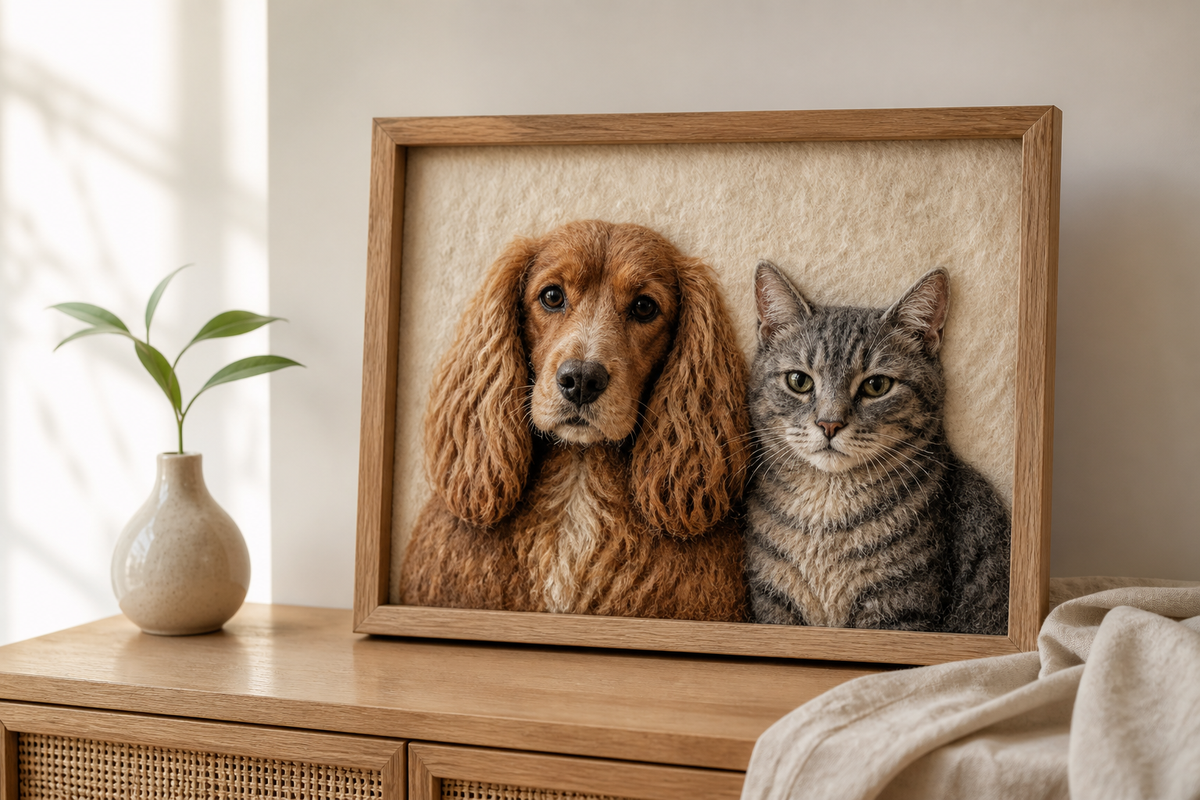
Pet portraits with multiple pets do not require a perfect group photograph. They do require a clear plan. If the dog was photographed in the garden and the cat only ever sat still on a sofa, those two images can still help a maker. The question is how the animals should relate once they share one frame.
That work begins before anyone chooses fur colours or background details. Decide the group shape, the relative size of each pet and which photograph is trusted for which feature. A short, honest brief is more useful than a folder of unexplained favourites.
Start with the group, not the prettiest photograph
Lay out one possible reference for each pet and ignore image quality for a moment. Look only at posture and direction. Is one animal facing left while the other turns sharply right? Is one sitting upright and the other lying down? The poses do not have to match, but they need to belong to the same composition.
A quiet side-by-side arrangement is usually easy to read. A slight overlap can feel closer, while a wide gap gives each pet more independence. None of these is automatically correct. Choose the relationship you recognise rather than inventing a closeness or hierarchy that was never there.
If one animal is meant to be the visual anchor, say so. Otherwise, ask for equal attention. Leaving that decision unstated can produce a technically tidy portrait that still feels unlike the household.
Give each photograph one job
For each pet, choose a lead image for expression and head angle. Supporting photographs can show the opposite ear, tail shape, chest markings or the coat in more reliable daylight. They are evidence, not extra votes.
Do not ask a maker to average five different expressions. Write down which one is the pet you remember. WYjade's reference photo guide covers focus, light and useful angles; this brief adds the relationships between separate sets of photographs.
That sentence does not pretend the source photographs agree. It tells the maker where each one is dependable.
Scale needs an anchor
Separate photographs are poor rulers. A small dog close to a phone camera can fill more of the frame than a large cat photographed from across a room. If relative size matters, include something firmer than visual guesswork.
A photograph of both pets beside the same chair can help even if it is too blurry for facial detail. So can their approximate shoulder heights, or a plain note that the cat's seated head usually reached the dog's shoulder. The point is not millimetre accuracy. It is avoiding an accidental size reversal.

Eye lines decide whether the animals feel together
Two front-facing head studies can look formal and balanced. A pair looking slightly towards the centre can feel more connected. One pet looking straight out while the other looks away may feel candid, but it can also make the frame seem split.
Check the height of the eyes as well as their direction. A head placed too high can make one animal look as though it is floating behind the other. Ask to see the simple arrangement before fine detail begins when the maker's process allows it.
Format affects what can be arranged comfortably. A flat portrait, shallow relief and freestanding piece handle overlap and depth differently, so use the 2D versus 3D portrait guide for that separate choice.
When light and coat colour disagree
One pet may be photographed in cool window light and another under a warm lamp. Dark coats may lose detail in shadow; pale coats may pick up the colour of a wall or blanket. Do not silently choose the most attractive colour from each image.
Instead, mark the reference that looks closest to real life. If no photograph is reliable, describe the uncertainty: “His coat was neutral grey, not blue-grey,” or “The indoor image makes her cream fur look more orange than it was.” This gives the maker a boundary without claiming information the photographs cannot supply.
The background is a new decision
Separate references often bring separate rooms, seasons and camera angles. Trying to preserve both backgrounds can make the portrait feel patched together. Start again: plain ground, a shared colour, or one simple location cue that belongs to both pets.
A favourite blanket or chair colour may be enough. A detailed garden scene needs more space and more visible evidence. Check the finished format before committing to it, and use the live felt pet portrait collection for current formats, dimensions and availability rather than inferring them from editorial images.
Name what the photographs do not show
Hidden features should stay unknown unless another reference reveals them. If the cat's left side is missing, do not ask for a mirrored pattern unless the markings really were symmetrical. If a dog's collar covers the neck, say whether it should remain, be omitted, or be replaced only when there is evidence for the fur underneath.
This is also where you note time. A puppy photograph and a senior photograph may both be clear, but they describe different faces and coats. Choose the age you want represented instead of blending them by accident.
Review the group before the details
At the preview stage, soften your gaze and look at the whole silhouette. Are the pets the intended size? Does the spacing feel natural? Is one face crowded by the frame? Those decisions are harder to fix mentally by admiring a well-made eye or ear.
Then move closer. Compare expression, markings, ear shape and colour against the references assigned to those jobs. The portrait preview guide gives the detailed review sequence without turning every difference into a fault.
A convincing multi-pet portrait is not the result of pretending separate photographs were taken together. It comes from making the joins deliberate: one group shape, believable scale, compatible eye lines and a written record of what each image can actually prove.