August 31, 2026
Pet Memory Box Ideas: Sort the Story Before the Objects
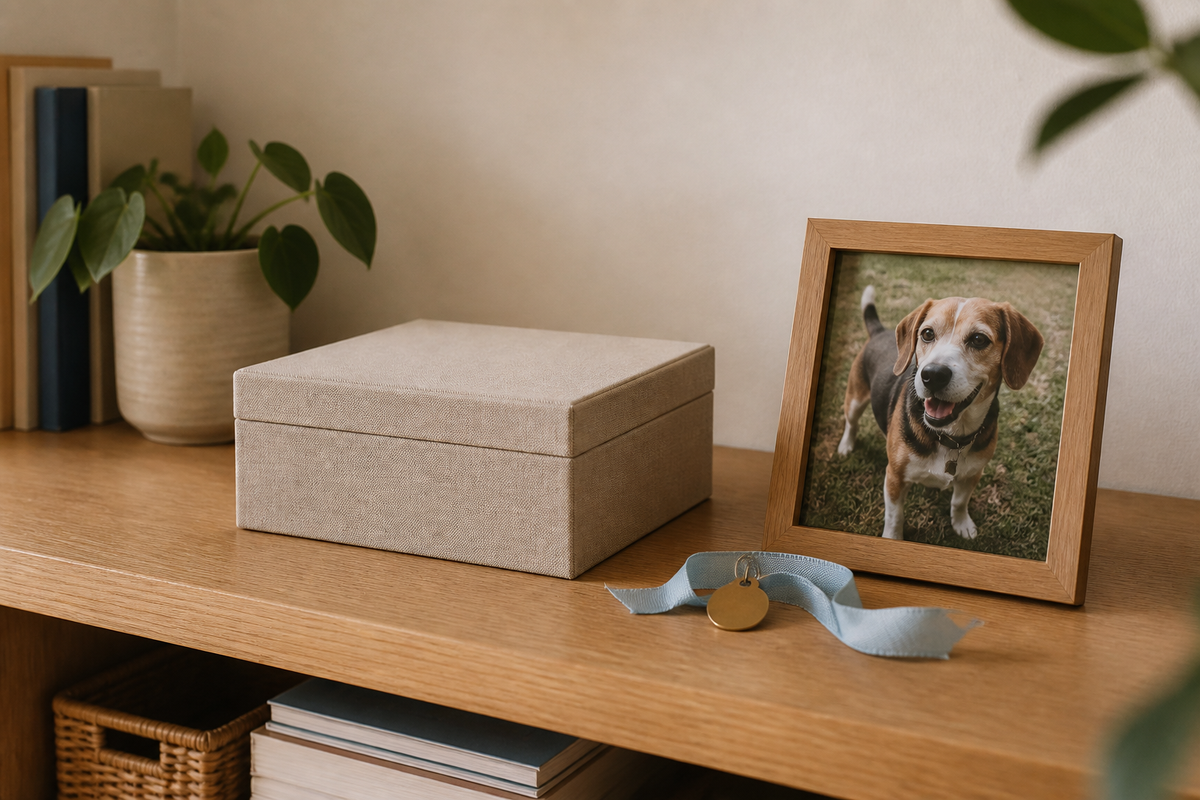
Some pet memory box ideas centre on a favourite collar or toy; others are mostly photographs and letters. Start with the items you want to keep, then give photographs a separate enclosure and bulky objects room of their own.
Sort what you already have before buying a container. Write down why each object belongs, then decide whether to store the original, make a copy, display it or leave it alone for now.
Start with an empty table
Lay the possible contents out where there is no food, drink or damp surface. Do not clean, trim, glue or mount anything yet. A first sort should be reversible. The table below is a way to slow the decision down, not a compulsory list.
| Object | What it may hold | First move | Possible home |
|---|---|---|---|
| Collar or identity tag | An everyday sound, routine or period of life | Photograph it and note when it was used | Loose in a clean compartment, without forcing the shape |
| Printed photograph | A face, place or ordinary habit | Identify the pet, people, place and approximate date on a separate card | Its own photo-safe enclosure inside the box |
| Sympathy card or letter | Another person's memory of the pet | Keep the envelope if it adds a date or sender | A paper folder, separate from bulky objects |
| Toy or small textile | Touch, play and familiar wear | Check that it is completely dry and free of loose dirt | A separate fabric or paper wrap if it is stable |
| Damaged, mouldy or stuck item | Important information in a fragile condition | Stop handling it | Outside the new box until a conservator advises you |
Leave space between the rows while you work. One object may fit more than one role. A tag can be both an object and the source of a sound you remember. A photograph can document a toy that is too dirty or unstable to store.
Add the story on a separate card
Write one sentence on a separate card before putting an item in the box. "Red collar" is an inventory label. "Milo wore this red collar on our early morning walks" records a relationship. The sentence can be rough. It should say something the object cannot say by itself.
A label also prevents future confusion: which cat appears in a photograph, whether a tag belonged to a previous address, or why an ordinary receipt stayed with the collection.

Give paper and photographs their own layer
Photographs, cards and drawings should not rub against buckles, metal tags or rough toys. The US National Archives guidance for family archives recommends suitable enclosures and notes that frequently handled or fragile photographs are better protected individually. It also warns against PVC enclosures for valuable photographs.
Separate compartments for paper and objects
Contents, assembly date and where the digital copies live.
Photographs and paper
Objects kept apart
Its own compartment, away from prints
Separately wrapped, without forcing its shape
Avoid paper clips, rubber bands, sticky notes, household tape and glue on original photographs. Choose supplies described for photographic storage, and look for materials that have passed the Photographic Activity Test when they will touch photographs. Put captions on the enclosure or on a separate card if the print does not safely accept a light pencil note.
Do not force a curled photograph flat or peel a print from an album page. If two photographs are stuck together, stop. An online trick that works on one photographic process can damage another.
Make a copy for handling and keep the original
A scanned copy can be shared, printed for display or used when commissioning a portrait. It does not make the original disposable. The National Archives digitising guidance says to keep originals because digital files carry their own loss risks. A flat photograph should fit completely on the scanner surface and be handled carefully throughout the process.
Give the file a useful name that does not depend on your memory of a camera roll. Include the pet's name, an approximate year and a short scene description. Keep a second copy somewhere separate from the first device. If the original is brittle, stuck, mouldy or mounted in an unfamiliar way, do not press it onto a scanner. Ask a photograph conservator about the safest route.
If the copy may become reference material for a portrait, the guide to useful pet portrait photographs explains how to separate an emotionally important image from clearer supporting views.
Choose privacy or display before choosing the container
A memory box and a shadow box do different jobs. A closed box reduces routine light and lets the collection stay private. A shadow box keeps selected objects visible, but light, mounting choices and long display periods become part of the decision.
The two formats can work together. Store original photographs and delicate paper, then display a duplicate print beside one stable object. The guide to displaying pet portraits uses paper stand-ins to test room position and daylight before committing. The same rehearsal can show whether a memorial display feels too exposed in a busy room.
Do not trap a condition problem inside
Only close clean, dry and stable objects into the box. Damp fabric, food, treats, loose batteries and leaking pens should stay out. A visibly mouldy item should not be brushed over the rest of the collection or sealed beside photographs. Isolate it and seek preservation advice.
Dust does not justify aggressive cleaning. A scratched photograph or weakened toy can lose material through rubbing, washing or adhesive repair. If an item is too fragile to handle, photograph it in place if that can be done without moving it, then leave treatment to someone who understands the material.
Give the box a stable home
Keep it in a cool, relatively dry, stable part of the home, away from direct light, radiators, vents, exterior walls and places with leak or condensation risk. Hot attics, damp basements and garages are poor choices for photographs and paper.
An interior cupboard can be more useful than a prominent shelf. Raise the box above floor level if there is any chance of a leak. Do not pack it so tightly that removing one photograph bends the others. The National Archives guide to preserving family photographs recommends cool, dry storage, dark storage for originals and duplicate prints for display.
Let other people add a memory without taking over
A shared box can hold notes from people who knew the pet in different ways. Give each person a separate card and a simple prompt: "What did they always do?" A child may draw instead of writing. A neighbour may remember the sound at the gate. A formal tribute is unnecessary.
The recent guide on pet sympathy card messages keeps the focus on the pet's name, one real memory and support that does not minimise grief. Those received cards may belong in the box, but the recipient decides whether they want to reread or store them.
Keep the archive separate from the portrait decision
If you later want a portrait, the guide to pet memorial portrait ideas can help you choose a literal, symbolic or private direction. Use the copies when discussing the portrait so the originals need less handling.
Check the maker's current formats, materials, size and revision terms when you are ready to commission.
Close the box with an inventory card on top
List what is inside, where digital copies live and which item needs special care. Add the date you assembled the box. If you remove something for display, note that on the card rather than trusting memory.
Leave spare cards nearby so you can add a memory later without having to reorganise the box.