August 29, 2026
How to Display Pet Portraits: Rehearse the Room First
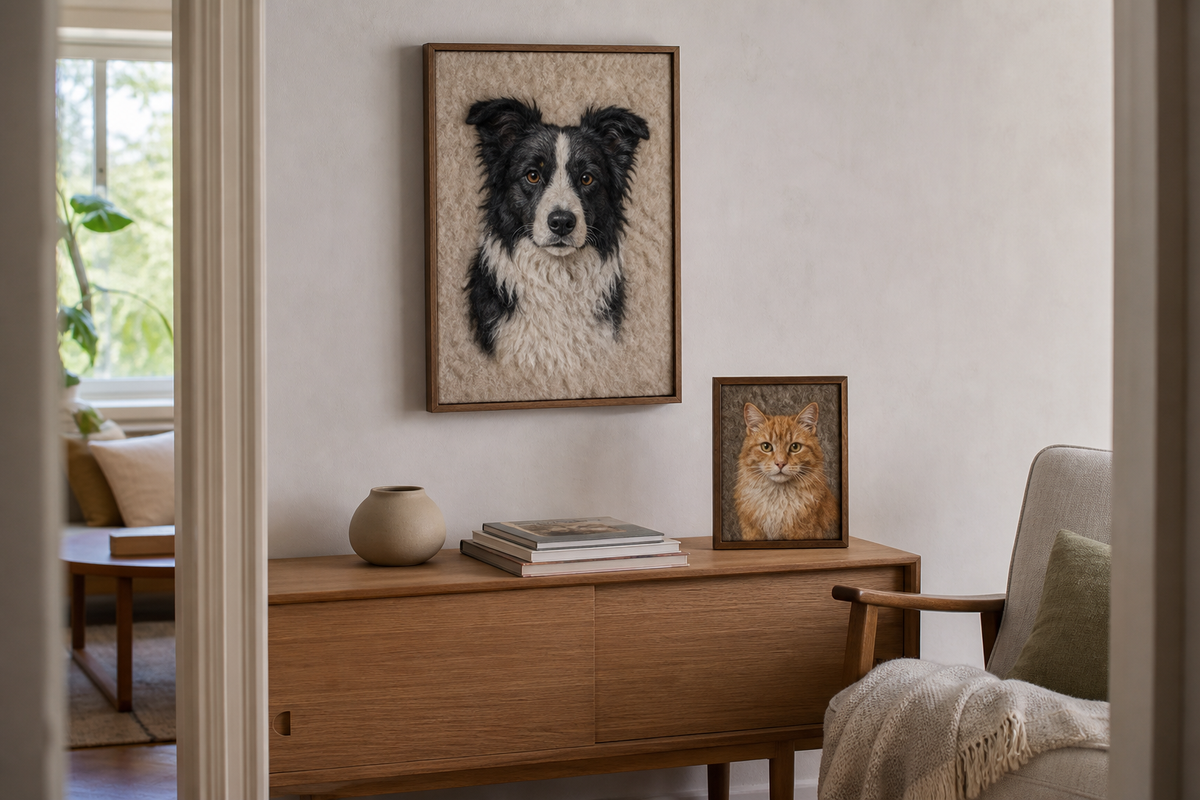
Learning how to display pet portraits begins before you choose a hook or clear a shelf. The useful first step is a room rehearsal. A portrait can feel balanced when held at arm's length and still disappear from the doorway, sit too close to a lamp or compete with the furniture beneath it.
Use paper, tape and the routes you already walk through the room. The aim is not to follow one universal hanging rule. It is to find a position where the portrait reads naturally, remains physically sensible and suits how private or prominent you want the image to be.
Build a paper stand-in
Cut a plain sheet of paper to the outside dimensions of the finished frame or display base. If the exact size is not settled, make two or three likely versions. Write the orientation on the back so a landscape rectangle does not quietly become a portrait one during the test.
Fix the paper with removable tape appropriate for the wall finish. Leave it in place for a day rather than deciding in the first minute. A blank shape is enough to reveal scale, edges and the amount of space around the future portrait. It also keeps the artwork away from repeated handling while you compare locations.

Start at the doorway, not at the wall
Walk out of the room, turn around and enter as you normally would. Notice when the paper shape first becomes visible. A position that works close up may hide behind a door, plant or lampshade from the usual approach.
Then sit in the chair, sofa or desk position where you spend time. The most useful sightline may be seated rather than standing. If the portrait is meant to be quietly present, it does not need to command the whole room. It does need to avoid looking stranded in an area that nobody naturally sees.
Choose between a wall and a shelf
Wall display gives a portrait a fixed relationship to the room. It suits a piece you want to keep in one position and view from farther away. A shelf or cabinet is easier to adjust and can make a small portrait feel deliberate without asking it to fill a large wall.
For a shelf, test the depth of the base and the space above it. Do not rely on a frame that only balances against the wall unless its support was designed for that use. Keep the piece away from the front edge and from places where bags, sleeves or a pet's movement can knock it.
Let nearby furniture set the scale
Look at the portrait and the furniture beneath it as one shape. A small frame centred over a wide sideboard may seem detached. Moving it slightly to join a lamp, vase or short stack of books can create a clearer group without enlarging the artwork.
A larger portrait needs breathing room at its outer edges. Use the paper stand-in to check doors, cabinet tops and shelves rather than measuring only the empty wall. The correct space is the part that remains after the room's practical movement is considered.
Decide whether the portrait stands alone
One portrait is the clearest choice when the expression, silhouette or tactile surface needs close attention. If other photographs and artworks already share the wall, decide whether the pet portrait is the anchor or one equal member of the group.
For a gallery wall, place every paper shape at once. Start with the largest or most meaningful piece, then add the others by their outside edges. Do not judge the gaps while holding one frame in your hands. Step back until the whole arrangement fits inside one glance.
Several pet portraits can be arranged by date, by animal or by visual rhythm. For several pets within one artwork, use the multi-pet portrait guide to plan the composition.
Rehearse the frame boundary
The frame changes the apparent size and mood of the portrait. A broad pale mount can make a small face easier to read from across the room. A dark narrow edge may connect with a deep background but merge into dark furniture.
Hold simple strips of coloured paper around a printout or thumbnail of the proposed portrait. This is not a material specification. It is a quick way to compare the boundary against the wall. If the artwork's background is still being chosen, use the separate guide to pet portrait background ideas before treating the frame as a cure for weak contrast.
Watch the room through a full day
Leave the paper in place from morning to evening. Note where direct sun crosses the wall, where a bright lamp produces glare and whether an open door or curtain changes the view. A good location at noon can be distracting at night.
The Canadian Conservation Institute advises checking whether a display location is exposed to physical knocks, splashes, direct or prolonged light, heat and rapidly changing conditions. Its basic care guidance for paintings is written for paintings, so use the maker's instructions for the actual medium. For needle-felted work, the needle-felted pet portrait care guide keeps dust, light and storage questions separate from room layout.
Keep a memorial display as private as it needs to be
A remembrance portrait does not have to sit in the most public room. A bedroom shelf, reading corner or small wall near a familiar routine may suit the memory better than an entryway. Test the location alone before adding text, collars, urns or photographs around it.
If the display will be a gift, do not assume the recipient wants a permanent memorial wall. The guide to pet memorial portrait ideas covers the choice between literal, symbolic and private remembrance.
Check the portrait from three distances
Stand close enough to see the eyes and small markings. Move to the normal viewing position. Finally, return to the doorway. At each point, ask a different question: can I see the detail, does the scale belong with the furniture, and does the portrait register without taking over the room?
If only the close view works, a shelf or smaller room may suit the piece. If it reads only from far away, check whether the face and distinctive features are being lost. The guide to pet portrait poses explains how silhouette and gaze affect that quick recognition.
Photograph the rehearsal before committing
Take one straight photograph of each paper position from the same doorway or seat. Compare the images side by side rather than walking repeatedly between walls. The camera flattens the room and often makes uneven spacing or an awkward furniture relationship easier to see.
Choose the location first, then confirm mounting hardware and installation with the frame maker, artwork maker or a qualified installer. Current portrait formats must come from the live felt pet portrait collection. This room rehearsal does not prove a particular size, weight, material or hanging method.