August 28, 2026
Pet Portrait Poses: Choose What the Body Says
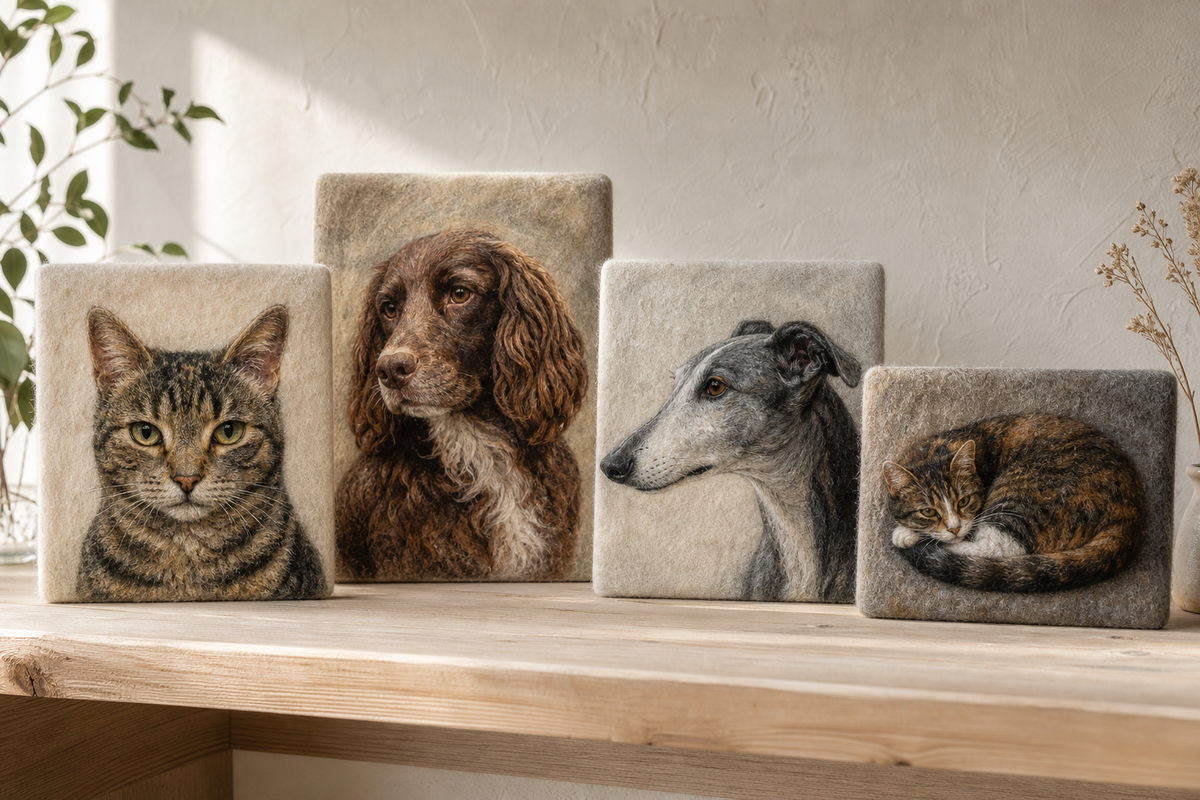
Choosing between pet portrait poses is not simply a matter of finding the sharpest photograph. A pose decides what the portrait says before colour, background or medium enters the conversation. One may hold a direct, alert gaze. Another may show the slouch, tucked paw or proud profile that family members recognise at once.
Do the four-thumbnail test
Start with four small reference images rather than one large favourite. Place a front-facing view, a three-quarter turn, a profile and a relaxed sitting or lying view side by side. Reduce each one until facial detail becomes difficult to read. What remains is the outline, weight and direction of the body.
This small test exposes two common problems. A photograph can have lovely eyes but an uncertain silhouette, or a clear shape but a face that no longer feels like the pet. Mark the image that reads most quickly, then compare it with the one that contains the most recognisable expression. They may not be the same photograph. That is useful information for the artist, not a reason to hide the weaker image.

Gaze and body position are separate decisions
A pet can look towards the camera while its chest turns away. It can also sit squarely while glancing to one side. Treat gaze and body position as two choices. This avoids asking a single imperfect photograph to control everything.
For example, a front-facing eye line may come from one image, while the shoulder angle is supported by another taken seconds later. Tell the artist which photograph leads and what the supporting one contributes. The reference photo guide explains the light, focus and angle needed before those details can be combined responsibly.
A head-on pose keeps small asymmetries visible
A direct pose suits pets whose identity lives in uneven markings, ear height or a slightly tilted mouth. Both sides of the face remain available for comparison. The result can feel present and conversational, especially when the eyes sit close to the viewer's level.
It is less forgiving when the photograph was taken from too high above. A large forehead, shortened muzzle or hidden chest may be camera distortion rather than anatomy. The American Kennel Club recommends working at the dog's eye level and photographing in a place where the dog feels comfortable. Those practical choices help a direct pose look natural rather than commanded.
A three-quarter turn shows depth without losing both eyes
A slight turn often gives the clearest sense of muzzle length, cheek volume and the transition from neck to chest. Both eyes can remain visible, but they should not be forced to match. The farther eye will usually appear narrower and slightly closer to the bridge of the nose.
This pose works well when a flat front view hides the shape of a long nose or thick ruff. It also gives the artist more evidence about depth. Check that the near ear has not covered a distinctive marking, and that the turn is gentle enough to keep the expression you recognise.
A profile depends on silhouette
A profile can be beautifully specific. It shows the slope from forehead to nose, the lift of an ear and the line under the jaw. It can also lose the sense of connection that comes from visible eyes. Choose it because the outline matters, not simply because the photograph feels elegant.
Look at the negative spaces around the nose, ear and chest. If those edges merge into hair, bedding or a dark wall, bring a second photograph with a cleaner outline. Background separation is addressed in more detail in the guide to pet portrait background ideas.
Sitting, lying and full-body poses carry different habits
A formal sit gives a stable triangle from head to front paws. It suits an upright dog or a cat that watches from a favourite perch. A relaxed lie has more horizontal movement. Tucked paws, a hip rolled to one side or a tail wrapped close to the body may say more about daily character than an alert studio posture.
Full-body views need stronger evidence because every leg, joint and patch contributes to the likeness. Do not choose one only to include more of the pet. Choose it when the stance itself is familiar. For a shared portrait, let the guide to pet portraits with multiple pets handle the separate question of scale and spacing between animals.
Crop is part of the pose
Use a simple paper window or the crop tool on a phone to compare head, bust and full-body versions. Keep a little room in front of the gaze. Avoid cutting exactly through an ear tip, wrist or tail bend, where the edge can look accidental. A tight crop magnifies expression and markings. A looser crop gives posture and surroundings more weight.
Make this decision before the background. Otherwise a decorative setting may persuade you to keep empty space that does not help the likeness. If the portrait is for remembrance, the pose may also need to carry a particular ritual or memory. The pet memorial portrait ideas article covers that emotional direction separately.
Do not invent hidden anatomy between references
Supporting photographs are valuable only when their roles are clear. A left-side image cannot prove a hidden right-side marking. A sitting photograph cannot reliably supply the back leg for a standing pose. State what is visible, what is repeated across photographs and what remains unknown.
Artists can often reconcile small changes in gaze or ear position. They should not be expected to guess a whole limb, coat pattern or collar line. When evidence conflicts, favour the photograph nearest the intended pose and explain when each image was taken.
Let the pet end the session
A relaxed pose cannot be made by holding an uncomfortable animal in place. Work in short spells and stop when attention, breathing or posture changes. Cats Protection advises that a cat should be able to remove itself from an interaction. The same principle is useful for any pet: the photograph is not worth distress.
Instead of chasing a perfect pose, observe where the pet already settles. Use familiar flooring, bedding and distances. A calm, ordinary position usually contains more recognisable evidence than a novelty setup.
Write the pose brief in one sentence
Finish with a plain instruction: “Use the three-quarter body turn from image two, keep the direct gaze from image one and crop just below the chest.” Add one reason, such as preserving an uneven ear or a tucked paw. That sentence gives the artist a hierarchy rather than a pile of preferences.
Then send the original files, not screenshots compressed inside a message. Keep the four-thumbnail comparison for your own decision, but let the artist inspect the full-resolution evidence. If you are considering a dimensional interpretation, the felt pet portrait collection shows the broader medium without changing the pose criteria above.